
Finance & Payroll
Timesheets
/timesheets10 stepsThe record of work actually done, and the gate every financial thing in Rostery passes through. Nothing counts as revenue, cost or pay until a timesheet here is approved.
Step by step
- 1
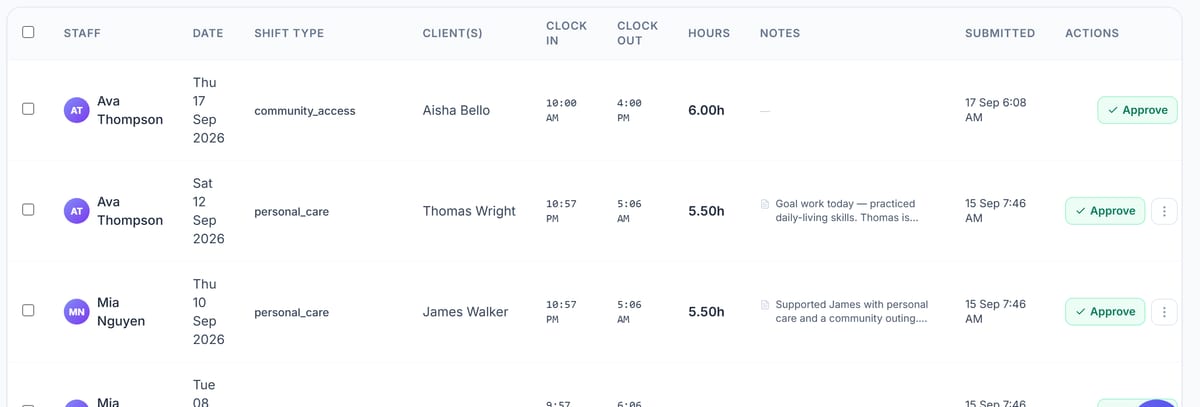
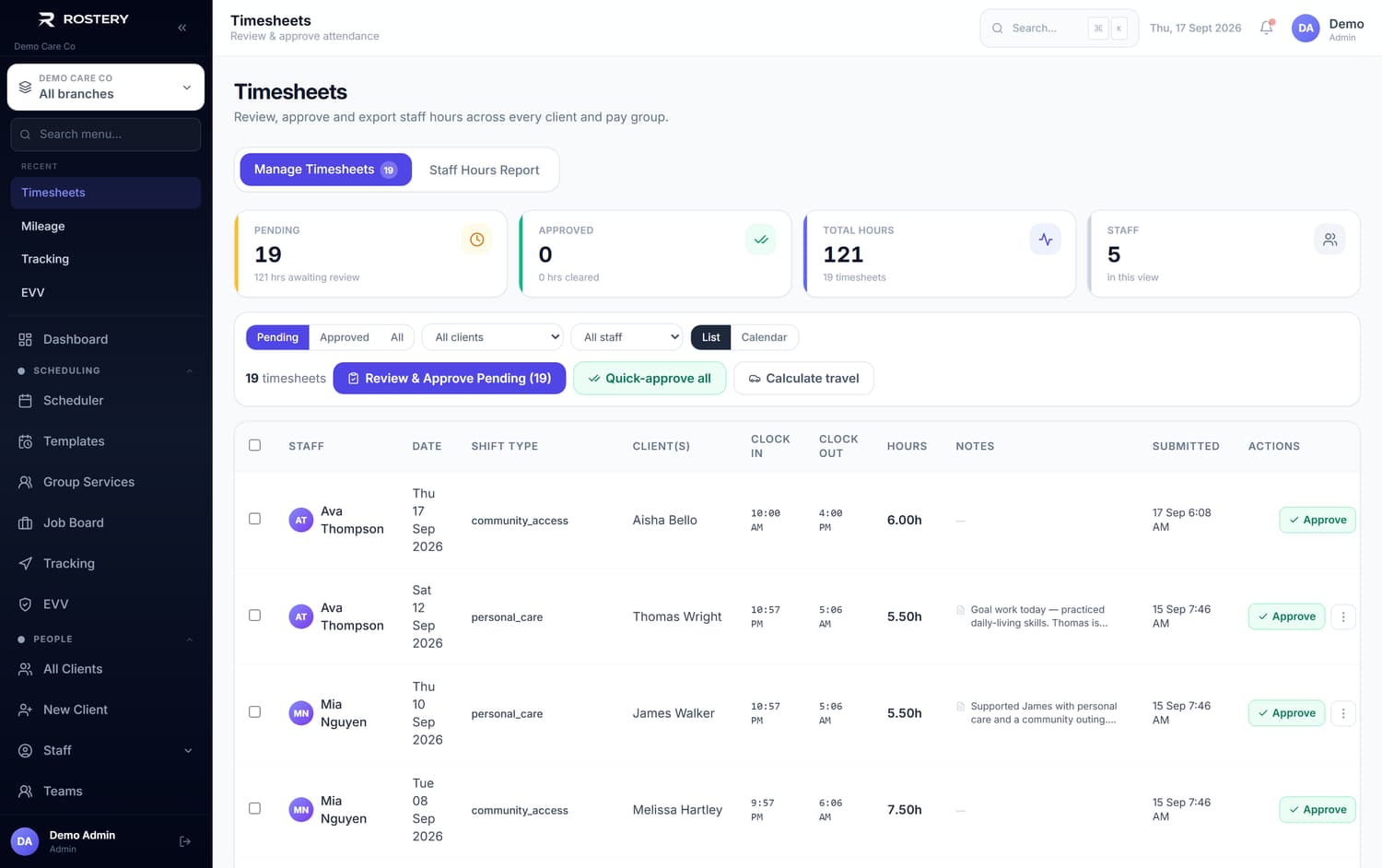
Pick the period with This week, or set your own range. The list shows Staff, Date, Shift Type, Client(s), Clock In, Clock Out, Hours and Submitted.
- 2
Compare Scheduled against Actual on each row. Where they differ the variance is highlighted — that is the column to read first, because it is where an unexpected cost comes from.
- 3
Correct anything wrong BEFORE approving: the actual times, Hrs, Mileage, Expense, Sleepover count, and whether a Co. car or Mod. veh. was used. Fixing after approval means unapproving, which unwinds the pay and the invoice with it.
- 4
Read the note attached to the shift with View full note. A shift with no progress note is a billing line with no evidence behind it, which is the first thing an auditor pulls on.
- 5
Approve the ones that are right. Approval is the single most consequential click in Rostery — it releases pay, invoicing and every financial report at once.
- 6
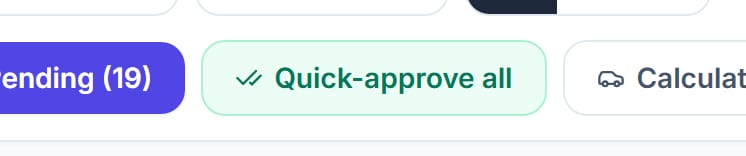
Use Quick-approve all only when you have actually reviewed the batch. It does exactly what it says, for everything pending on screen.
- 7
If something was approved in error, use the unapprove action to move it back to pending. Reset all to booked puts a batch back to the start.
- 8
Check Est. Pay and the band columns — Weekday Hours, Sat, Sun, PH — before a pay run. They show how SCHADS penalties resolved, and a number that looks wrong here will look wrong on the payslip too.
- 9
Run the anomalies view before closing a period. It surfaces the timesheets that do not look like the others — very long shifts, missing clock-outs, duplicate entries.
- 10
Export with Download CSV, or Sync to Xero if your accounting integration is connected.
The screen
Did this answer your question?
If not, talk to us — we answer from Australia, in business hours.